
You’ve probably said it yourself. Someone asks what you do on a Saturday morning and you shrug it off: “Oh, I just help out with my kid’s football team.”
Just help out. As if standing in the cold every week, planning sessions, managing a group of kids and their parents, washing the kit and driving to away games is nothing. As if grassroots football would somehow carry on without you. It wouldn’t. There are hundreds of thousands of volunteers keeping grassroots football going in this country, and it sits squarely on their shoulders. You’re not “just” anything.
But a lot of volunteer coaches carry a quiet worry: am I actually any good at this? You watch someone with a badge run a slick session and feel like a fraud. You wonder whether the kids would be better off with a “proper” coach.
So what actually makes a great junior football coach? Rarely the things you’d assume.
Great coaches show up
The single most important thing you can do is keep turning up.
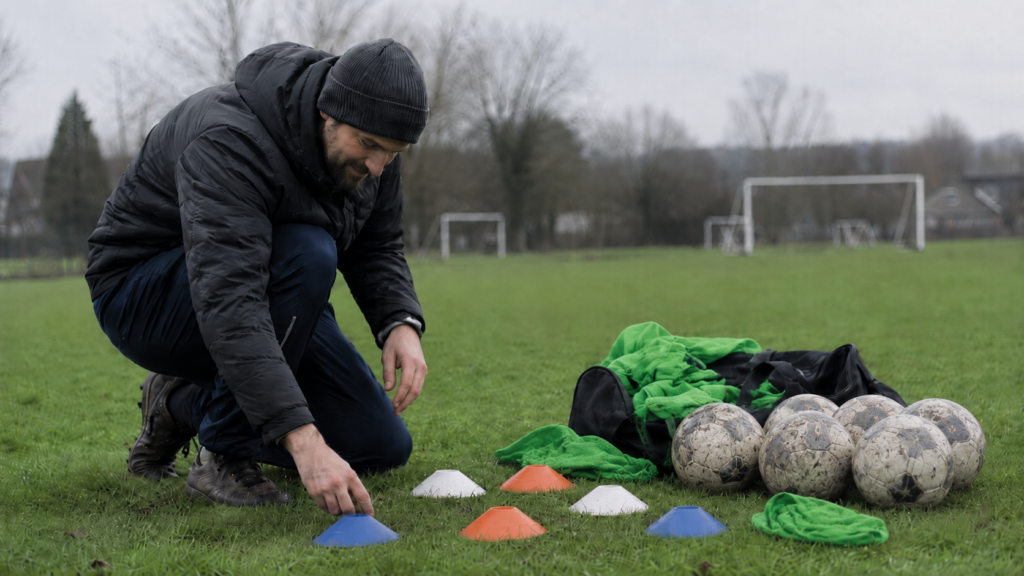
Kids notice consistency. The coach who’s there every week, in the rain, in the dark, in February when nobody wants to be outside, becomes a fixed point in a young player’s life. That reliability matters more than any drill. A brilliant session run by someone who’s there half the time will never beat an ordinary one run by someone the kids can count on. You already do this, week in, week out. That’s the foundation everything else is built on.
Great coaches see the child, not just the player
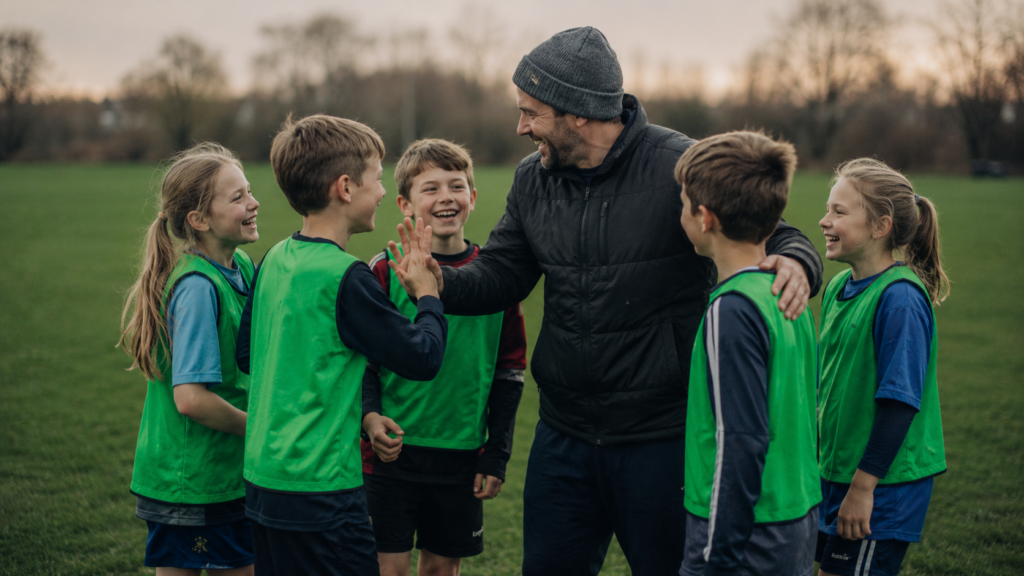
Great junior coaches know that the eight-year-old in front of them is a person first and a footballer second. They notice the kid who’s gone quiet because something’s up at home. They know who needs an arm around the shoulder and who needs a gentle push. They remember that the smallest, shyest player in the group might only need one good moment to fall in love with the game.
You don’t get that from a coaching manual. You get it from caring and paying attention.
Great coaches make it fun
Ask any child why they play football and you’ll hear the same answer: because it’s fun. Ask why they stopped, and it’s usually because it wasn’t anymore.
The coaches who keep kids in the game aren’t the ones drilling them like mini professionals. They’re the ones who keep it light, keep everyone involved, and let kids play. Lots of touches, plenty of small-sided games, and a laugh along the way. Winning is nice. Enjoying it is what brings them back next season. If your players go home smiling, you’ve done the most important part of the job.
Great coaches stay calm when it matters
Grassroots touchlines can get heated, and the best coaches are the calm ones. They don’t scream instructions at kids who are already trying their hardest. They don’t lose their heads at the referee, or let one loud parent set the tone. They know the kids are always watching, taking their cues from how the coach behaves. Calm coach, calm team. You won’t get it right every week. Nobody does.
Great coaches keep getting better
This is what really separates good from great: the great ones never stop learning.
Not badges for the sake of badges, but a genuine willingness to pick up a new drill, try a different approach, and ask what could have gone better after a session that didn’t quite land. The best grassroots coaches are magpies, borrowing good ideas wherever they find them and sharpening what they do. Wanting to get better isn’t a sign you’re falling short.
You’re better than you think
If you’ve read this far, you almost certainly care more than you give yourself credit for. And caring, showing up, and wanting to do right by a group of kids is most of the job already. You don’t need to be a former pro. You don’t need every badge going. You need to keep turning up, keep it fun, and keep learning, and the rest comes with time.
That last part is where Coaches Stack comes in. Hundreds of drills and games, ready-made session plans, and a monthly magazine full of ideas, all built to help ordinary volunteer coaches run sessions they’re proud of. Not to turn you into someone else. To back the coach you already are.
You were never “just a volunteer.” You’re the reason these kids play. Let’s make you an even better one.
Common questions from grassroots coaches
What makes a good grassroots football coach? Far less than most volunteers think. Turning up consistently, keeping sessions fun, staying calm on the touchline, treating each child as a person, and being willing to keep learning matter more than badges or a playing career.
Do I need coaching badges to coach a junior football team? Your club or league may ask for a basic qualification and safeguarding checks, so it’s worth asking them. But badges don’t make a great coach on their own. Plenty of the best grassroots coaches learn most of what matters on the pitch, week after week.
How can I become a better volunteer football coach? Keep it simple. Plan sessions that give kids plenty of touches, ask what went well after each one, and borrow good ideas wherever you find them. A drills library and ready-made session plans take the hard work out of planning so you can focus on the coaching itself.